
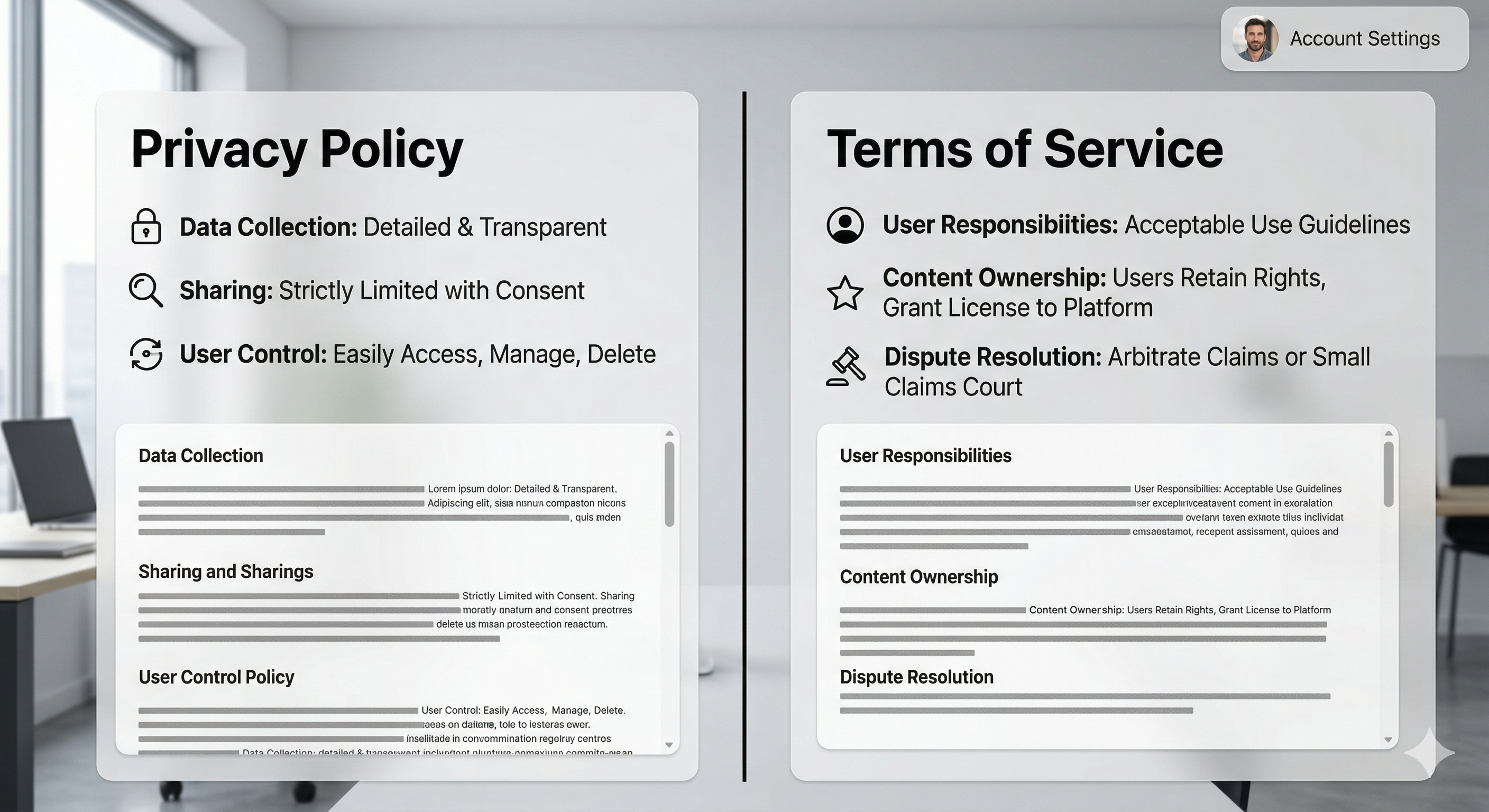
Privacy Policy vs Terms and Conditions: What’s the Difference?
When setting up a website or online business, many founders come across two essential legal documents: a privacy policy and terms and conditions. While both are critical, they serve completely different purposes — and confusing them can leave your business exposed.
If you want to build a compliant and trustworthy platform, understanding the difference between these two documents is essential.
What is a Privacy Policy?
A privacy policy explains how your business collects, uses, stores, and protects user data. It focuses entirely on data transparency and user rights.
This document is required by most data protection laws worldwide.
Key Purpose
- Inform users about data collection
- Explain data usage
- Provide transparency
What Are Terms and Conditions?
Terms and Conditions define the rules users must follow when using your platform. It is a legal agreement that protects your business operations.
Key Purpose
- Define user behavior
- Limit liability
- Set usage rules
Main Differences
- Privacy Policy: Focuses on user data
- Terms and Conditions: Focuses on platform usage
In simple terms, one protects user rights, and the other protects your business.
Why You Need Both
Many websites make the mistake of having only one of these documents. This creates gaps in legal protection.
- Without a privacy policy → You risk legal penalties
- Without terms → You lose control over user behavior
Having both ensures full coverage.
When Should You Add Them?
You should include both documents before launching your website or app. They should be easily accessible through your footer and during user signup.
Final Thoughts
A privacy policy and terms and conditions are not interchangeable — they are complementary. Together, they create a strong legal foundation for your business.